Success is hateful, especially to those whom it overthrows
The Man Who Laughs“Success is hateful, especially to those whom it overthrows” names the resentment produced when one performer’s popularity deprives others of their livelihood. In Gwynplaine’s story, the maxim applies first to the Green Box troupe’s triumph over neighboring shows, then takes on a darker resonance when the laughter that made him famous overwhelms his attempt to speak seriously to the House of Lords.
Meaning and Context
The expression appears as a principle about competition: success is not merely admired by those nearby, because its gains may correspond to their losses. Its accompanying observation, “It is rare that the eaten adore the eaters,” sharpens the image into one of unequal consumption. The successful performer draws in the audience; those whose audiences disappear have little reason to celebrate his rise.
The saying follows the account of Gwynplaine’s hit and introduces the hostility it creates. Its bluntness makes the emotional logic explicit before the narrative turns to the concrete effects: the crowd gathers at the Green Box, while neighboring entertainments lose receipts and popularity. Success is therefore both public acclaim and an economic force that redistributes attention.
Gwynplaine’s Popularity and Its Rivals
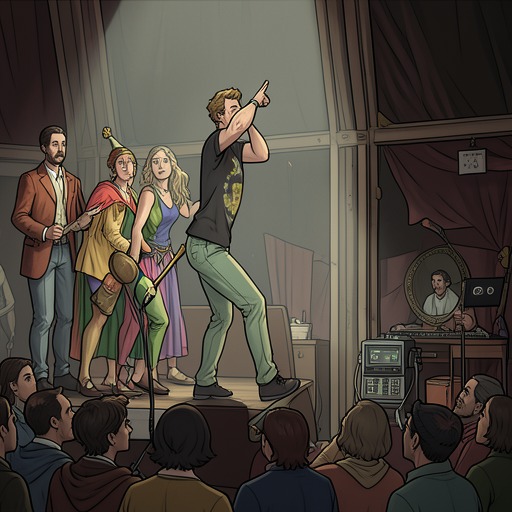
Gwynplaine’s appeal rests on the startling difference between his appearance and his inner state. His face seems to laugh, but he does not; the fixed expression turns every emotion into an apparent spectacle of hilarity. On the platform, spectators laugh at the sight of him, and even the executioner is made to laugh. The crowds’ response gives Gwynplaine rapid renown at fairs and crossroads, while the performance seems to relieve the melancholy of those who watch.
The response reaches its height when a ray of light exposes Gwynplaine’s face during the performance of Chaos Vanquished. Laughter spreads through the audience and out into the streets, where passers-by join in despite seeing nothing. The applause and calls for Gwynplaine to return confirm the show’s success, but the account also marks its limits: the penny admission draws a vast popular audience, not fashionable society.
For the surrounding performers, that triumph has a material cost. The Green Box’s increased receipts correspond to reduced receipts for nearby shows; entertainments that had previously prospered collapse. Clowns and other performers envy Gwynplaine, and some mothers of child performers resent the contrast between his lucrative appearance and their children’s beauty. One complains that their children have failed where Gwynplaine succeeded. The maxim’s “overthrown” thus means more than wounded pride: it includes lost custom and the fear that an audience now captivated by one act will abandon the rest.
Laughter as Acclaim and Injury
The novel complicates the apparent joy of Gwynplaine’s success by distinguishing the laughter of spectators from his own experience. His face produces the laughter, but his thoughts do not share it; the expression is fixed, involuntary, and unable to register what he actually feels. The crowd’s delight can therefore coexist with the performer’s suffering. What appears to be a gift to spectators is also a condition that denies Gwynplaine control over how he is seen.
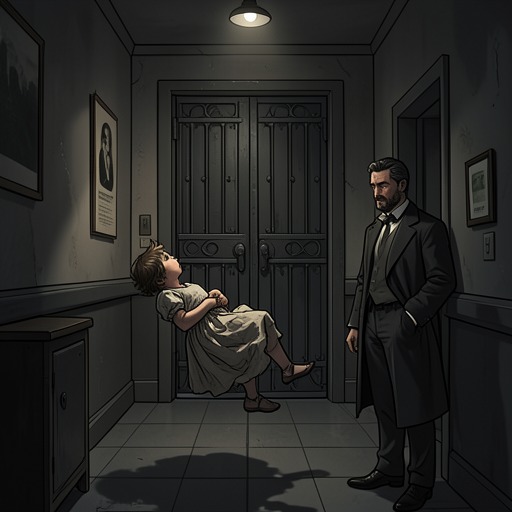
That contradiction becomes acute in the House of Lords. While speaking about the misery he witnessed as an abandoned child, Gwynplaine is overcome by emotion and begins to sob, but the fixed laugh of his face turns the moment into an uncontrollable burst of laughter. The assembly’s mood flips: the gathering, which had been under a cloud, breaks into merriment. The lords clap, sneer, and insult him. In this scene, laughter no longer signals a successful entertainment offered to a willing audience; it becomes the means by which a powerful audience refuses the seriousness of his appeal.
The Expression’s Wider Force
The maxim initially describes rivalry among performers, but its recurrence around Gwynplaine’s public life exposes a broader instability in success. The same face that brings him acclaim among fairground crowds obstructs his effort to be heard by the powerful. His words appeal to the lords, while his appearance provokes their laughter; he experiences the conflict as a painful division between what he says and what spectators see.
The expression consequently carries both an economic and a social irony. Gwynplaine’s rise does displace competing acts, but his fame does not secure command over his own image or guarantee respect. Applause and mockery both arise from the crowd’s response to his face, and the latter can silence him precisely when he tries to speak beyond it. Success is hateful to those it displaces; in Gwynplaine’s case, even success itself remains bound to the condition that makes him an object of laughter.